Dopamine Nation Summary
🔊 Listen to this summary
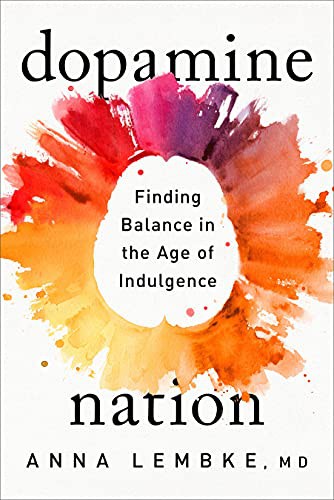
In short
Dopamine Nation argues that we have transformed the world from a place of scarcity into a place of overwhelming abundance, and our brains — built for scarcity — have not caught up. Dr Anna Lembke, a psychiatrist at Stanford who runs the Stanford Addiction Medicine Dual Diagnosis Clinic, explains that pleasure and pain are processed in the same part of the brain and work like a seesaw: every pleasure tips the balance one way, and the brain pushes back toward pain to restore equilibrium. When pleasure is pursued relentlessly — through drugs, alcohol, food, shopping, gaming, pornography or endless scrolling — the brain adapts, tolerance grows, and ordinary life starts to feel flat and painful. That is the dopamine deficit state. The book's prescription is not willpower alone, but a structured reset: a period of abstinence of about thirty days, the DOPAMINE framework for examining what a behaviour gives and costs, self-binding to create distance from temptation, radical honesty, and deliberately seeking healthy discomfort to tip the balance back.
Why does the thing that felt so good last month barely register now — and why does stopping it feel so much worse than never starting it? In Dopamine Nation, Dr Anna Lembke argues that the answer is in the wiring of the brain itself: pleasure and pain share a single balance, and every high is followed by a push in the opposite direction. We live in a world where the next hit is always one tap away, and that, she says, is why so many of us feel anxious, flat and restless even while surrounded by comfort.
Key takeaways
- Pleasure and pain share one balance: the brain processes them in the same region and works constantly to keep them level, like a seesaw — tip it toward pleasure, and it pushes back toward pain.
- The relentless pursuit of pleasure leads to pain: repeated overstimulation makes the brain adapt by thinning out dopamine receptors, so the same dose buys less pleasure and everyday life feels duller — a dopamine deficit state.
- Abstinence of about thirty days lets the balance reset: in Lembke's clinical experience, about a month away from a drug of choice is roughly how long the brain's reward system needs to recalibrate, with the hardest period in the first two weeks.
- The DOPAMINE framework structures the reset: Data, Objectives, Problems, Abstinence, Mindfulness, Insight, Next steps and Experiment — a sequence for counting what you consume, naming what it gives and costs, stepping away, observing what arises, and deciding what returns, and on what terms.
- Pain, chosen deliberately, can restore pleasure: healthy discomfort — exercise, cold exposure, fasting or other effortful challenges — tips the balance toward pain in a controlled way, and the brain's rebound can leave you feeling better afterwards; self-binding and radical honesty help keep the new balance in place.
A world of abundance, a brain built for scarcity
Lembke opens with a paradox of modern life: for most of human history, pleasure was scarce and pain was unavoidable; today, in wealthy societies, the reverse is often true. Food, drugs, sex, shopping, gambling, gaming and social media are cheap, legal, plentiful and engineered to be rewarding, while pain — boredom, discomfort, waiting, effort — can be avoided at the touch of a button. The brain, shaped by evolution for scarcity, has not had time to adapt to that reversal, and the result is a population that is overstimulated and under-satisfied at the same time.
That framing matters because it removes the moral judgement from addiction. Lembke's patients in her Stanford clinic, she writes, are no longer only people addicted to drugs; they include people whose lives are being narrowed by phones, food, work, shopping or romance novels — her own included, as she describes her own compulsive reading of romance novels online. The book treats all of these as different expressions of the same mechanism, which is why its audience is far wider than people with a substance-use disorder. The shared mechanism is dopamine, the chemical of wanting and craving, which drives us to seek reward and to repeat whatever produced it.
The pleasure-pain balance
The book's central image is a seesaw. Lembke explains, drawing on opponent-process theory, that the brain processes pleasure and pain in the same region and seeks homeostasis — a level balance. When you experience something pleasurable, dopamine is released and the balance tips toward pleasure. The brain does not like to stay tipped, so it responds by pushing back, which Lembke pictures as little gremlins climbing onto the pain side of the seesaw to level it out. The immediate high is followed by a small dip below baseline — the after-effect that makes you want another hit.
With repetition, the pushback grows stronger and lasts longer. The brain thins out its dopamine receptors to cope with the flood, so the same amount of a substance or behaviour produces less pleasure — tolerance — and you need more to feel the same. Eventually the balance sits tilted toward pain even when you are not using: ordinary pleasures feel flat, anxiety and low mood rise, and the behaviour is pursued not to feel good but to feel normal. That, in Lembke's terms, is the dopamine deficit state, and it explains why the relentless pursuit of pleasure, and the relentless avoidance of pain, both lead to more pain.
Thirty days off: the dopamine fast
Lembke's first clinical prescription is abstinence — not forever, but for long enough for the brain to reset. In her clinic she typically asks patients to stop their drug of choice for about thirty days. Four weeks is roughly how long it takes, in her experience, for the reward system to recalibrate: the first two weeks are often the hardest, as the accumulated pain weight makes itself felt, and the second two weeks are when people begin to get used to not depending on the behaviour, and ordinary things start to register again. The book is careful that this is a starting point, not a universal rule — for some people it takes longer, for others less — and that serious substance addiction needs professional help and may need medication.
The thirty days are structured by the DOPAMINE acronym, which gives the book its practical spine. Data means counting what you actually consume, and when. Objectives means naming what the behaviour does for you — because it does give you something, or you would not do it. Problems means listing what it costs, including the slow, hidden bills. Abstinence is the thirty days off. Mindfulness is observing cravings and difficult feelings without obeying them. Insight is what you learn about yourself in the process. Next steps are the rules you will live by afterwards. Experiment is returning, if at all, with new rules, and adjusting them in the real world. The sequence turns a vague intention to cut back into a test with a beginning, a middle and a decision at the end.
Self-binding, honesty and chosen pain
Abstinence alone is rarely enough, because the world does not stop offering the thing you stepped away from. Lembke therefore gives three supports that recur through the book. Self-binding means deliberately creating distance between yourself and your drug of choice — deleting an app, leaving a card at home, telling someone else to hold a password, or otherwise making the behaviour harder to reach in the moment of craving. The idea is to put friction between impulse and action, because willpower in the moment is the weakest tool.
Radical honesty is the second support: telling the truth about what you are doing, how much, and what it costs, to yourself and to at least one other person. Lembke argues that honesty creates awareness, accountability and connection, and that secrecy is what allows compulsive behaviour to grow. The third support is the most counterintuitive: deliberately choosing pain. If too much pleasure tips the balance toward pain, then controlled discomfort — a cold shower, a hard run, a fast, a difficult conversation — can tip it back, and the brain's rebound toward pleasure can leave you calmer and more satisfied afterwards. The book does not present pain as punishment, but as a way of restoring a balance that indulgence has tilted.
Who should read this book
This book is for anyone who recognises themselves in the description of a habit that has quietly started to run them — scrolling, sugar, shopping, gaming, drinking, or work that never switches off — and who wants to understand why stopping feels so hard and what a structured reset looks like. It will also be useful to clinicians, teachers and parents trying to understand compulsive behaviour in others. It is not a treatment plan for serious addiction to alcohol, drugs or gambling: anyone in that position should seek professional help, and the book itself is clear that its thirty-day approach is for everyday compulsions, not a substitute for medical care.
The takeaway
Pleasure and pain are not opposites to be chosen between; they are two sides of one balance, and chasing one without the other tilts the whole system. The way back is not more pleasure, but a pause long enough for the balance to level, followed by honest rules about what comes back — and a willingness to let a little chosen discomfort do some of the work.
Our verdict
A clear, compassionate and genuinely useful explanation of why modern abundance leaves so many people feeling flat, anchored in real patient stories from a Stanford addiction clinic and a practical framework that readers can actually follow. It loses a point because the seesaw metaphor, while memorable, simplifies a complex neuroscience, and because the book's case rests heavily on clinical anecdote and selected studies rather than on the kind of large trials that would settle how far the thirty-day reset generalises. Our rating: 4.4/5.
Try this today: Pick one behaviour that quietly pulls at you — scrolling, snacking, shopping or gaming — write down honestly how much time or money it took yesterday, and decide one concrete piece of distance you will put between yourself and it today.
If you want to go deeper on this theme, Atomic Habits, The Power of Habit, and Hooked are the natural next reads.
Frequently asked questions
What is Dopamine Nation about?
It is Dr Anna Lembke's account of how pleasure and pain share one balance in the brain, why the relentless pursuit of pleasure in a world of abundance leads to pain and addiction, and how a structured reset can restore balance.
What is the pleasure-pain balance?
It is Lembke's image of a seesaw: pleasure and pain are processed in the same brain region, and the brain works to keep them level. A pleasure tips the balance one way, and the brain pushes back toward pain to restore equilibrium.
What is a dopamine fast?
In Lembke's use, it is a period of about thirty days away from one specific high-reward behaviour, long enough for the brain's reward system to recalibrate. It is not the social-media version of avoiding all stimulation for a day.
What does DOPAMINE stand for in the book?
Data, Objectives, Problems, Abstinence, Mindfulness, Insight, Next steps and Experiment — the sequence Lembke uses to count a behaviour, name what it gives and costs, step away for thirty days, observe what arises, and decide what returns on what terms.
What is self-binding?
Self-binding is deliberately creating barriers between yourself and a drug of choice — for example deleting an app, leaving a card at home, or asking someone else to hold a password — so that craving does not lead straight to the behaviour.
Is Dopamine Nation medical advice?
No. Lembke is a psychiatrist writing from clinical experience, but the book is not a treatment plan, and serious addiction to alcohol, drugs or gambling needs professional help. The thirty-day approach is aimed at everyday compulsions.
Want the full book?
This summary covers the core ideas — the full book goes much deeper with stories, research, and detail.
Get Dopamine Nation on AmazonAs an Amazon Associate I earn from qualifying purchases.
Your turn
Which idea from this book hit you hardest — and what will you do differently this week because of it? Join the discussion under our 60-second video on YouTube.
Discuss on YouTube
Comments
Share what you thought of this book — good or bad. Sign in with a free GitHub account to comment.
Want a different book summarized? Suggest it here.