Four Thousand Weeks Summary
🔊 Listen to this summary
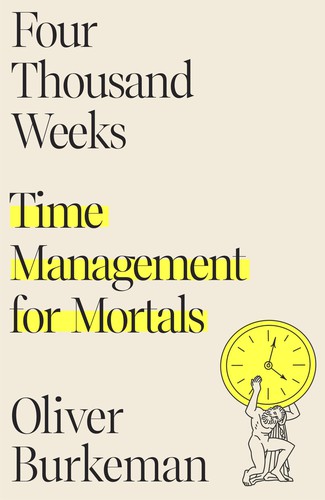
In short
Oliver Burkeman starts with simple arithmetic: if you live to eighty, you get about four thousand weeks. No productivity system can change that total. Instead of promising to help you fit everything in, this book argues for the opposite — accept your limits, choose a few things that matter, and let the rest go. It is a time-management book for people who have tried every time-management system and still feel behind.
Here is the promise every productivity system makes: get organised enough, efficient enough, disciplined enough, and one day you will finally feel on top of things. Burkeman spent years writing a productivity column for The Guardian, trying most of those systems himself. His conclusion is that the promise is impossible to keep — and that chasing it is the very thing making us miserable. The Four Thousand Weeks summary, in one line: you will never have enough time for everything, so the real skill is choosing what to do with the time you have.
Key takeaways
- An 80-year life is about 4,000 weeks — the total is fixed, and no system expands it.
- The efficiency trap: getting faster at tasks only creates more demands.
- Every choice means missing out on almost everything else — and that is what makes choices meaningful.
- Distraction is often an escape from the discomfort of facing your limits.
- Do some things for their own sake: atelic activities, patience, and accepting your cosmic insignificance are the way out of the rush.
Four Thousand Weeks summary: the arithmetic of a life
The title is a piece of arithmetic. Live to eighty and you get roughly four thousand weeks — about 4,160, rounded down for the bad weeks. Burkeman opens the book with that number because most of us never do the sum. We live as if time were an open-ended resource that better organisation could stretch, when in fact the total is fixed and shockingly small.
He traces the problem back to the clock itself. Before clocks, work was task-oriented: life followed the rhythms of the jobs that needed doing. Once time became something to measure, buy, and sell, it became something to optimise — and optimisation never ends. The trouble, as Burkeman puts it, is that in attempting to master your time, time ends up mastering you.
The efficiency trap: faster only makes the conveyor belt run quicker
The book's central idea is the efficiency trap. Getting more efficient does not generally produce the feeling of having enough time, because the demands expand to fill whatever capacity you create. Answer emails faster and you get more email. Clear your plate faster and more work lands on it. The person who clears their inbox by 11 a.m. has simply signalled to the world that they are available.
Burkeman points to the historian Ruth Schwartz Cowan's finding about washing machines: they did not cut the hours spent on laundry, because standards of cleanliness rose to absorb the time saved. Convenience culture works the same way. Freeing up time backfires, because the freed-up time just fills with more things you feel you have to do — and sometimes it quietly eliminates things you did not realise you valued until they were gone.
The joy of missing out
Drawing on the philosopher Martin Heidegger, Burkeman argues that finitude is not an accident of human life but its defining feature. Every decision closes off countless other possibilities — and that is precisely what gives decisions their weight. If you did not have to decide what to miss out on, your choices could not truly mean anything. He calls the flip side of FOMO "the joy of missing out": the thrilling recognition that missing almost everything is guaranteed, so you are free to commit fully to the few things you choose.
This is why Burkeman tells readers to choose to settle — and to decide in advance what to fail at. A life in which you try to keep every option open is a life in which nothing gets your full attention. Picking a handful of things to care about, and consciously neglecting the rest, is not giving up. It is the only way anything gets done properly.
Do things for their own sake
The second half of the book looks for a way to live inside your limits rather than fighting them. One key idea comes from the philosopher Kieran Setiya: "atelic activities" — things whose value is in the doing itself, not in reaching an end point. A walk with a friend, playing music badly, sitting with your children: these are not means to an outcome, and that is the point. In a world that turns even leisure into another to-do list, doing something for its own sake is a small rebellion.
Burkeman also prescribes patience — staying with one thing long enough for mastery to develop — and what he calls "cosmic insignificance therapy": the reminder that what you do with your life does not matter all that much to the universe, and that this is liberating, not depressing. Once you stop trying to make your life cosmically significant, you get to spend your finite time focused on a few things that matter to you, right now. The book closes with ten tools for embracing your finitude, including keeping a "done list" instead of only a to-do list, and practising doing nothing at all.
Who should read this book
Anyone drowning in to-do lists, productivity apps, and the feeling of always being behind — especially people who have already tried every system and suspect the problem is not their discipline. It is also the right book for anyone at a crossroads: a career change, a new baby, a parent ageing, or any moment when the finitude of time stops being abstract. No philosophy background needed; Burkeman writes like a funny, self-deprecating friend who has read the philosophers so you do not have to.
The takeaway
The average human lifespan is absurdly, terrifyingly, insultingly short.
Stop waiting for the day when everything is under control — that day is never coming. Choose the few things that matter, give them your real attention, and let the rest go without guilt. A finite life, fully lived, beats an infinite to-do list every time.
Our verdict
The rare productivity book that tells you to stop trying to be productive — and means it. It is short, funny, and genuinely freeing: the chapter on the efficiency trap alone changed how I think about my inbox. Our rating: 4.5/5.
Try this today: Decide in advance one thing you will fail at this week — and let it fail on purpose.
If you want to go deeper on this theme, Deep Work, Essentialism, and The One Thing are the natural next reads.
Frequently asked questions
What is Four Thousand Weeks about?
Oliver Burkeman argues that the average human life is about 4,000 weeks long, and no time-management system can change that. The book's answer is to accept your limits, choose a few things that matter, and let the rest go.
What is the efficiency trap?
Burkeman's term for the way getting more efficient creates more demands instead of more free time. Answer emails faster and you get more email; finish tasks faster and expectations rise. Efficiency does not lead to feeling on top of things.
What does 'the joy of missing out' mean?
The liberating recognition that you are guaranteed to miss out on almost everything — and that this is what makes your choices meaningful. If you didn't have to choose what to miss, your choices couldn't truly matter.
Is Four Thousand Weeks a productivity book?
Not in the usual sense. It argues the standard productivity promise — that one day you'll be on top of everything — is impossible to keep, and offers acceptance of your limits instead of another system. It does end with ten practical tools, including a fixed-volume approach to work and deciding in advance what to fail at.
How long is Four Thousand Weeks?
The hardcover is 288 pages. It's a short, readable book — a few hours of reading, though its ideas tend to stay with you much longer than that.
Want the full book?
This summary covers the core ideas — the full book goes much deeper with stories, research, and detail.
Get Four Thousand Weeks on AmazonAs an Amazon Associate I earn from qualifying purchases.
This summary shares a book’s ideas for general education only.
Your turn
Which idea from this book hit you hardest — and what will you do differently this week because of it? Join the discussion under our 60-second video on YouTube.
Discuss on YouTube
Comments
Share what you thought of this book — good or bad. Sign in with a free GitHub account to comment.
Want a different book summarized? Suggest it here.