The Laws of Human Nature Summary
🔊 Listen to this summary
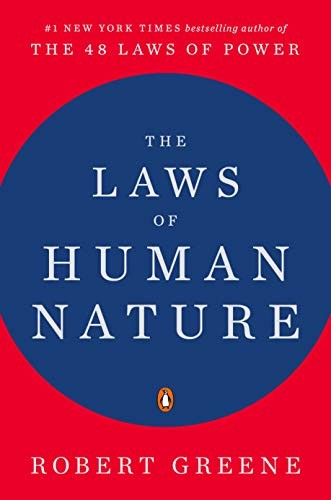
In short
Robert Greene's 624-page study of human psychology is built around 18 laws — from irrationality and narcissism to envy and aggression. His case: people rarely act on logic, and once you see the patterns driving them, you can read people better, handle difficult personalities, and master your own worst impulses first.
You have probably met someone who seemed perfectly reasonable until a bruised ego turned them into a different person — or caught yourself making a decision you knew was emotional and calling it logical. The Laws of Human Nature summary, in one line: people are driven by forces they barely understand, says Robert Greene, and the person who understands those forces has an enormous advantage in every room they enter.
Key takeaways
- Emotions drive decisions far more than logic — even your own.
- Everyone is narcissistic to a degree; empathy is the skill that keeps it in check.
- People wear social masks — judge character by repeated patterns, not by promises.
- Envy is usually silent and disguised; learn to spot it in others and in yourself.
- Each generation is shaped by its own era — and blind to the next one.
The law of irrationality: master your emotional self
Greene opens with the law he considers the most important: we are not rational creatures who sometimes feel, but emotional creatures who sometimes think. He illustrates it with Athens in the Peloponnesian War — after the leader Pericles died, grief and anger pushed the Athenians into decisions that cost them the war. The same biases show up in everyday life: confirmation bias, the urge to agree with the group, the habit of deciding first and justifying later. Greene's remedy is unglamorous: notice your emotions before you act on them, and treat your own first reactions with suspicion.
The law of narcissism: turn self-love into empathy
Everyone is narcissistic to a degree, Greene argues — the question is whether it is healthy or toxic. Deep narcissists cannot see past their own needs; healthy narcissism includes genuine interest in other people. The antidote is empathy, and Greene treats it as a skill, not a trait: pay close attention to what people actually care about, listen for what they repeat, and try to see the world from inside their frame. People who feel understood lower their guard — and you learn far more about them in the process.
The law of role-playing: see through people's masks
People rarely show you who they are — they show you the role the moment requires. Greene uses the psychologist Milton Erickson, who learned to read patients by watching the small cues that leaked past their performed selves. The practical lesson is to watch for inconsistencies: the gap between what someone says and what they do, the tone that does not match the words, the pattern that repeats across situations. Character is best judged by a person's track record, not by a single impressive performance. Greene illustrates this with Howard Hughes, whose early brilliance hid compulsive patterns that eventually ran his life.
The law of envy: beware the fragile ego
Envy is the law people least want to admit applies to them — and the one Greene says does the most quiet damage. It rarely announces itself. It shows up as faint praise, gossip disguised as concern, or a sudden chill from someone whose success you just celebrated. Greene's advice is twofold: recognize envy in others before you share good news too freely, and recognize it in yourself before comparison turns into resentment. The cure is to focus on your own aims rather than measuring your life against someone else's highlight reel.
Who should read this book
Anyone who works with people — managers, negotiators, teachers, parents — and anyone who has ever been blindsided by someone they thought they understood. It is especially useful if you liked The 48 Laws of Power but wanted the psychology behind the tactics. Be warned: at 624 pages it is a long read, best taken one law at a time.
The takeaway
The book's real subject is not other people — it is you. Every law starts with your own irrationality, your own narcissism, your own envy, and only then turns outward. Master yourself first, and other people become far easier to read.
Our verdict
The most useful of Greene's books for everyday life, and also the longest. The historical stories are gripping, the advice is practical, and the self-knowledge cuts deeper than the power tactics he is famous for. It loses half a point only because 624 pages demand real commitment. Our rating: 4.5/5.
Try this today: In your next conversation, notice one emotion driving the other person before you reply to their words.
If you want to go deeper on this theme, The 48 Laws of Power, Influence, and Never Split the Difference are the natural next reads.
Frequently asked questions
What is The Laws of Human Nature about?
Robert Greene explains human behavior through 18 laws, from irrationality and narcissism to envy and aggression, using stories from history to show how these patterns drive what people do — and how to read them.
How many laws are in the book?
Eighteen, starting with the law of irrationality and ending with the law of death denial. Each law is a full chapter, so you can read them in any order.
Is it a sequel to The 48 Laws of Power?
No. It is a standalone book by the same author. Where The 48 Laws of Power is about gaining power, The Laws of Human Nature is about understanding people — including yourself.
Is The Laws of Human Nature hard to read?
It is long — 624 pages — and dense with historical stories. But each chapter stands alone, so it works well read one law at a time.
Do I need to read the whole book?
No. The laws are independent chapters. If you only read the laws on irrationality, narcissism, role-playing, and envy, you will have most of the book's practical value.
Want the full book?
This summary covers the core ideas — the full book goes much deeper with stories, research, and detail.
Get The Laws of Human Nature on AmazonAs an Amazon Associate I earn from qualifying purchases.
This summary shares a book’s ideas for general education only — it is not financial advice. Consider speaking to a qualified financial adviser before acting on any of it.
Your turn
Which idea from this book hit you hardest — and what will you do differently this week because of it? Join the discussion under our 60-second video on YouTube.
Discuss on YouTube
Comments
Share what you thought of this book — good or bad. Sign in with a free GitHub account to comment.
Want a different book summarized? Suggest it here.