Attached Summary
🔊 Listen to this summary
In short
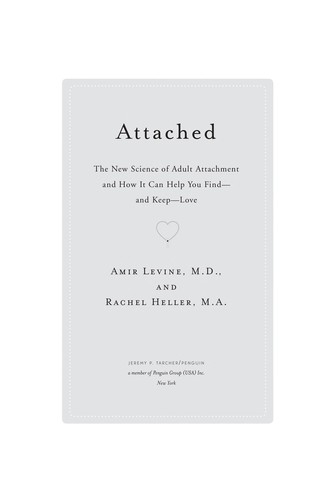
Psychiatrist Amir Levine and psychologist Rachel Heller apply attachment theory — the science of how we bond — to adult romantic relationships. Each of us, they argue, has an attachment style — secure, anxious, or avoidant — that quietly runs our love life: how much closeness we want, how we fight, and why we keep choosing the same kind of partner.
Why do some people navigate relationships effortlessly while others keep repeating the same painful pattern? The Attached summary, in one line: it is not bad luck, say Amir Levine and Rachel Heller — it is your attachment style. The need to be close to someone is wired into our biology, and once you see which style you (and your partner) carry, the chaos of dating starts to make sense.
Key takeaways
- Adults have one of three attachment styles: secure, anxious, or avoidant.
- Needing a partner is not weakness — it is biology. The book calls this the dependency paradox.
- The anxious-avoidant pairing is the most common — and most unstable — relationship trap.
- Secure partners can steady an insecure partner and raise satisfaction for both.
- Attachment styles are not fixed: with awareness and practice, you can become more secure.
Attached summary: the three attachment styles
Attachment theory began with the bond between infants and caregivers — the work of British psychoanalyst John Bowlby in the 1950s — and the book argues the same system governs adult romance. Roughly half of adults are secure: comfortable with intimacy, warm, and able to say what they need. About a fifth are anxious: they crave closeness, stay alert to every shift in their partner's mood, and worry about being loved back. About a quarter are avoidant: they equate intimacy with losing independence and keep emotional distance.
The styles are not personality verdicts. They are patterns, shaped by upbringing, genes, and life experience — and the book's first job is simply helping you spot yours. Most of the misery in dating, it argues, comes from not knowing which style you are dealing with, in yourself or in the other person.
The dependency paradox: needing someone makes you stronger
Modern self-help often treats dependency as a flaw — something to outgrow. The book argues the opposite, and this is its central idea. The dependency paradox says that the more securely connected you are to a reliable partner, the more independent you become: a secure base at home is what gives you the confidence to take risks, be creative, and explore the world.
The authors point to research on children and adults alike: people with a dependable person to return to do better — in health, in growth, even in their careers. Depending on someone is not codependency, in this telling. It is how humans are built.
The anxious-avoidant trap
The book's most useful chapter is the trap. Anxious and avoidant people are strongly drawn to each other — and they make each other miserable. The anxious partner pursues closeness; the avoidant partner pulls away to protect their independence; the withdrawal makes the anxious partner pursue harder, which makes the avoidant partner pull away further.
The cycle feels like passion, especially at the start, because the uncertainty keeps the anxious partner's attachment system on high alert. The book's advice is blunt: if you are anxious, stop chasing avoidant partners. The calm, steady secure partner who feels 'boring' at first is usually the one who can actually give you what you want.
Becoming more secure
The hopeful part of the book is that styles can change. Secure people, the authors show, communicate directly: they say what they need, they respond to conflict instead of escalating or withdrawing, and they do not play games. Anyone can learn those moves — the book teaches concrete habits, like stating a need plainly instead of hinting, and choosing a partner whose style steadies you rather than triggers you.
A secure partner can also act as a buffer, calming an anxious or avoidant partner over time. The book's message is not 'find a perfect person' — it is 'understand the system, then work with it.'
Who should read this book
Anyone who keeps ending up in the same kind of relationship — especially if you are anxious and keep falling for people who pull away. It is also genuinely useful inside a relationship: once both partners know their styles, arguments stop feeling personal and start looking like patterns you can name and fix together.
The takeaway
Your love life is not random, and it is not a character flaw. It runs on an attachment system you did not choose — but you can learn to read it, pick partners who steady you instead of triggering you, and practice the direct, calm communication that secure people use naturally. Needing someone, the book argues, is not the problem. Needing the wrong someone is.
Our verdict
A genuinely clarifying book — the kind that reframes your entire dating history in an afternoon. The science is solid and the advice is practical, though the case studies can feel repetitive by the final chapters. Our rating: 4.5/5.
Try this today: Think back to your last argument with a partner — did you pursue, withdraw, or stay steady? That is your attachment style talking.
If you want to go deeper on this theme, How to Win Friends and Influence People, Mindset, and The Courage to Be Disliked are the natural next reads.
Frequently asked questions
What is Attached about?
Amir Levine and Rachel Heller apply attachment theory — the science of how we bond — to adult romantic relationships. The book argues that each of us has an attachment style that shapes how we handle intimacy, conflict, and closeness.
What are the three attachment styles?
Secure (about half of adults): comfortable with intimacy and good at communicating needs. Anxious (about a fifth): craves closeness and worries about being loved back. Avoidant (about a quarter): equates intimacy with a loss of independence and keeps emotional distance.
What is the dependency paradox?
The book's central idea: depending on a reliable partner does not make you weaker — it makes you more independent. A secure base at home gives you the confidence to take risks and explore the world.
What is the anxious-avoidant trap?
A common, unstable pairing: the anxious partner pursues closeness while the avoidant partner withdraws from it. Each person's behavior triggers the other's fears, and the cycle repeats.
Can your attachment style change?
Yes. The authors argue attachment styles are not fixed for life. With awareness, a secure partner, and practice at communicating needs directly, people can become more secure over time.
Is Attached only for people who are dating?
No. It is also for people already in relationships: the book shows how to spot your own style and your partner's, and how to communicate in ways that make both of you more secure.
Want the full book?
This summary covers the core ideas — the full book goes much deeper with stories, research, and detail.
Get Attached on AmazonAs an Amazon Associate I earn from qualifying purchases.
This summary shares a book's ideas for general education only — it is not professional advice. Consider speaking to a qualified professional before acting on any of it.
Your turn
Which idea from this book hit you hardest — and what will you do differently this week because of it? Join the discussion under our 60-second video on YouTube.
Discuss on YouTube
Comments
Share what you thought of this book — good or bad. Sign in with a free GitHub account to comment.
Want a different book summarized? Suggest it here.