Digital Minimalism Summary
🔊 Listen to this summary
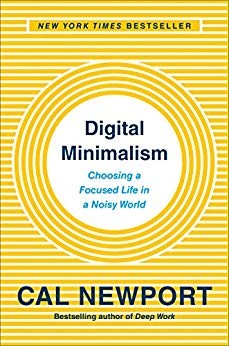
In short
Digital Minimalism argues that small fixes — deleting one app, setting a screen-time limit, or promising not to check a phone at dinner — rarely work, because the problem is not one app but a whole way of using technology. Cal Newport proposes a philosophy instead: focus online time on a small number of carefully chosen activities that strongly support things you value, and happily miss out on the rest. The book sets out three principles — clutter is costly, optimisation matters, and intentionality is satisfying — and then gives a practical method for putting them into practice, centred on a 30-day digital declutter. After the break, each tool is reintroduced only if it earns its place, on terms you set.
What if the problem is not that you lack willpower, but that you never decided what your phone is actually for? In Digital Minimalism, Cal Newport argues that most of us drifted into our digital habits rather than choosing them, and that the result is fragmented attention, shallow leisure and very little time alone with our own thoughts. His answer is not to abandon technology, but to rebuild your relationship with it from scratch — keeping only the tools that genuinely serve a value you care about, using them in the best possible way, and letting the rest go.
Key takeaways
- Digital minimalism is a philosophy, not a list of tips: focus your online time on a small number of carefully selected activities that strongly support things you value, and happily miss out on everything else.
- Clutter is costly: each low-value app or feed may look harmless on its own, but together they take a large share of time, attention and mental energy.
- Optimisation matters: it is not enough for a tool to offer some benefit; ask whether it is the best way to serve the value in question, and whether your current way of using it captures that benefit or mostly brings side effects.
- Intentionality is satisfying: choosing a tool deliberately, rather than falling into it by default, changes how the experience feels, even when the tool itself is the same.
- A 30-day digital declutter works better than gradual cuts: take a break from optional technologies for 30 days, rediscover satisfying offline activities in that time, then reintroduce each technology from a blank slate, only on terms you define.
The attention economy is not neutral
Newport's starting point is that many popular apps and platforms are designed to capture as much attention as possible, using techniques drawn from behavioural psychology, including unpredictable rewards similar to those that make slot machines compelling. That design means willpower alone is a weak defence: the tools are built to be hard to put down, and every notification, feed refresh and suggested video is another pull on attention. The book also draws on research about smartphone use to argue that constant connectivity leaves little uninterrupted time for deep work, reflection or real conversation.
The point is not that every digital tool is harmful. Newport distinguishes between tools that genuinely help you do something you value — keeping in touch with a close friend, learning a skill, doing your job — and tools that mainly fill time while quietly crowding out better things. Without a clear philosophy for deciding which is which, he argues, the default is to keep everything, and the cost is paid in attention. That framing shifts the question from "is this app bad?" to "is this the best use of my limited attention?"
Clutter is costly, optimisation matters, intentionality satisfies
"Clutter is costly" means the true price of a tool is not its download cost or its subscription fee, but the life required to maintain it — the minutes, the mental overhead, the habit of checking, and the opportunities it displaces. A tool that returns a little value can still be a bad bargain if it consumes far more than it gives back.
"Optimisation is important" adds a second test: once a tool passes the first test, how you use it still matters. A social network used in a focused way to arrange real meetings, for example, can serve a value far better than the same network used for open-ended scrolling. "Intentionality is satisfying" is the third principle, and the most personal: people who choose their tools deliberately report more satisfaction with them, because the choice itself restores a sense of control. Together, the three principles turn a vague feeling of being overwhelmed into a decision procedure.
The 30-day digital declutter
The book's central practical method is the digital declutter: a 30-day break from optional technologies — the apps, sites and services that are not essential to your work or to running your household. During the break you are not meant simply to endure the absence; you are meant to actively rediscover activities you find satisfying and meaningful, such as walking, reading, making things, or spending unhurried time with people. Newport argues that 30 days is long enough for the initial discomfort to fade and for you to learn what an unfilled evening actually holds.
After the 30 days, each technology is reintroduced one at a time, starting from a blank slate. For each one you decide what value it serves, whether it is the best way to serve that value, and exactly how you will use it — for example, checking a particular service at set times, on a computer rather than a phone, or only for a defined purpose. Technologies that cannot pass that test stay out. The method is deliberately strict about the break, because Newport argues that gradual trimming loses to the friction of convenience: it is easier to keep a habit than to renegotiate it every day.
Solitude, and the case for high-quality leisure
One of the book's most discussed ideas is solitude deprivation: the loss of time alone with your own thoughts. Newport uses "solitude" to mean time free from input from other minds, not physical isolation — the gaps in the day that used to be filled by waiting, walking or simply thinking, and are now filled by a phone. He argues that those gaps matter for processing experience, forming ideas and regulating emotion, and that losing them leaves people restless and less able to think clearly.
The remedy he proposes is not only to remove digital noise but to replace it with high-quality leisure: activities that are demanding enough to hold attention, that produce something tangible, or that involve real social contact. Examples in the book include learning a craft, playing music, exercising, volunteering, and spending time with friends in person rather than through a screen. The argument is that leisure is not just rest; it is the part of life that replenishes attention and gives the declutter something to be for, rather than merely something to be against.
Who should read this book
This book is for anyone who feels busy and distracted without feeling productive or rested — people who check their phone far more than they intend to, who find it hard to concentrate on a book or a conversation, or who sense that their evenings disappear into feeds without leaving them happier. It is especially useful for readers who have tried screen-time limits or app deletions and found the effect faded within weeks, and who want a structured reset rather than another tip.
The takeaway
Digital minimalism is not about using less technology for its own sake; it is about using technology only where it clearly serves something you value, and using it well. The 30-day declutter is the mechanism, but the lasting change is the habit of deciding in advance what each tool is for — and being willing to miss out on everything else.
Our verdict
A clear, practical and genuinely useful framework for a problem most readers recognise immediately, with a specific 30-day method rather than vague advice. It loses a point because the clean split between "optional" and "essential" technology is harder to maintain for people whose work, family coordination or social life genuinely runs through a phone, and because some of its claims about the wider effects of smartphones are argued more from selected examples than from settled evidence. Our rating: 4.0/5.
Try this today: Pick one optional app you check most often, remove it from your phone for today only, and notice — in writing, at the end of the day — what you did with the time and attention that would otherwise have gone to it.
If you want to go deeper on this theme, Deep Work, The Anxious Generation, and Essentialism are the natural next reads.
Frequently asked questions
What is digital minimalism?
Digital minimalism is a philosophy of technology use in which you focus your online time on a small number of carefully selected and optimised activities that strongly support things you value, and happily miss out on everything else.
What is the 30-day digital declutter?
It is a 30-day break from optional technologies — those not essential to your work or household — during which you rediscover satisfying offline activities, then reintroduce each technology only if it serves a clear value, on terms you set.
Does Cal Newport want readers to quit technology altogether?
No. The book argues for keeping technology that genuinely serves a value you care about, and using it in the best possible way, while dropping the tools whose costs outweigh their benefits.
What are the three principles of digital minimalism?
Clutter is costly, optimisation is important, and intentionality is satisfying — in short, too many tools drain attention, how you use a tool matters as much as whether you use it, and choosing deliberately feels better than drifting.
What does Newport mean by solitude deprivation?
He means spending almost no time alone with your own thoughts, free from input from other minds, because the gaps in the day are now filled by a phone. Solitude here is about mental space, not physical isolation.
Is Digital Minimalism a follow-up to Deep Work?
It is a companion rather than a sequel: Deep Work is about the value of focused work, while Digital Minimalism is about rebuilding your wider relationship with technology so that focus has room to happen. Both books are by Cal Newport.
Want the full book?
This summary covers the core ideas — the full book goes much deeper with stories, research, and detail.
Get Digital Minimalism on AmazonAs an Amazon Associate I earn from qualifying purchases.
Your turn
Which idea from this book hit you hardest — and what will you do differently this week because of it? Join the discussion under our 60-second video on YouTube.
Discuss on YouTube
Comments
Share what you thought of this book — good or bad. Sign in with a free GitHub account to comment.
Want a different book summarized? Suggest it here.