The Let Them Theory Summary
🔊 Listen to this summary
In short
Mel Robbins' argument is simple: most of your stress comes from trying to control other people — what they think, say, and do. The Let Them Theory hands that control back: let them think what they think, let them do what they do, and spend your energy on the only person you can actually change — you. Then comes the second half, 'Let Me': decide what you think, what you do, and how you handle your feelings about it.
Here is a question worth sitting with: how much of your day is spent managing other people? Worrying what they think of you, trying to change their minds, chasing their approval, or replaying what they said. The Let Them Theory summary, in one line: that is where your energy is leaking, says Mel Robbins — and two small words can plug the leak.
Key takeaways
- You cannot control other people's thoughts, opinions, or choices — and trying to is the main source of your stress.
- 'Let Them' is step one: stop managing others. 'Let Me' is step two: take charge of your own response.
- You can always control three things: your thoughts about a situation, what you do, and how you react to your emotions.
- Nagging does not change people; the ABC Loop — Apologize, Back off, Celebrate — does more than pressure ever will.
- Other people's opinions are their business, not yours — comparison and people-pleasing cost you your own life.
The Let Them Theory summary: two words that give you your power back
The idea clicked for Robbins at her son's prom, watching adults try to manage teenagers who had their own plans. The tool that came out of it is almost embarrassingly simple: when someone does something you cannot control, say 'Let them.' Let them be late. Let them disagree. Let them leave you out. Let them judge you.
The point is not that you do not care. The point is that you were never in charge of them in the first place, and every minute spent trying is a minute stolen from your own life. Robbins describes 'Let Them' as a tool that shows you in an instant what is in your control and what is not. The friend who did not invite you, the colleague who underestimates you, the partner who is not ready to commit — none of that is yours to fix.
Let Me: the half that does the work
'Let Them' on its own is only half the theory, and Robbins is clear that it is the easy half. If you stop there, you are just shrugging while your life stays stuck. The second half is 'Let Me' — turning all that freed-up energy back on yourself.
'Let Me' means giving yourself permission: let me say what I need, let me do the work, let me go. In Robbins' words, there are three things you can always control — your thoughts about a situation, what you do or don't do, and how you react to your emotions. Everything else is 'Let Them' territory. Robbins applies the pair across eight areas of life, from managing stress and adult friendships to motivating others to change and choosing the love you deserve.
The ABC Loop: how to help someone who won't change
There is one case where 'Let Them' feels too passive: someone you love is stuck in a bad pattern, and your nagging is not working. For that, Robbins offers the ABC Loop. A is Apologize and Ask: own your part in the dynamic — apologize for the nagging — then ask open-ended questions and hand ownership back to them. B is Back off: stop the reminders and unsolicited advice, and give them space to take charge. C is Celebrate: when they take even a small step on their own, acknowledge it with genuine encouragement.
The loop is a long-term strategy, not a trick. It works because it stops the cycle where your pressure makes them dig in deeper, and replaces it with modelling the change yourself. You cannot force an adult child, a partner, or a colleague to change — but you can stop being the reason they resist.
Other people's opinions are not your problem
The book spends much of its energy on the fear of judgment, because that fear quietly runs so many lives. Robbins argues that other people's opinions of you are not your business — they are a reflection of them, not a verdict on you. The same goes for comparison: fixating on other people's advantages drains your motivation, while focusing on your own path builds it.
This is why the theory lands so hard with people-pleasers. If your mood, your plans, and your self-worth all depend on what others think, you have handed them the remote control to your life. 'Let Them' takes it back — not by fighting their opinions, but by deciding their opinions are not the thing that decides your day.
Who should read this book
Anyone exhausted by people-pleasing, or whose mood rises and falls with other people's approval. It is especially useful for parents of teenagers and adult children, for anyone stuck in a relationship they keep trying to fix from the outside, and for people who replay conversations for hours wondering what others thought. If you already live comfortably by 'let it go', the idea will feel familiar — but the 'Let Me' half still earns its place.
The takeaway
Stop spending your life managing other people and start spending it on yourself. Let them think what they think and do what they do — then let yourself think, do, and feel what you actually want. That is the whole theory, and it fits in two words because it has to: you need it in the moment someone disappoints you, not after a weekend of reflection.
Our verdict
The rare self-help book whose core idea fits in two words — and actually works the same afternoon you read it. It loses half a star because the idea is simple and the book repeats it across eight areas; if you already live by 'let it go', parts will feel familiar. But as a tool for chronic people-pleasers, it is the most usable one I have read in years. Our rating: 4.5/5.
Try this today: The next time someone irritates you today, say 'Let them' — then finish the sentence with 'Let me…' and do that one thing.
If you want to go deeper on this theme, Mindset, The Subtle Art of Not Giving a F*ck, and The Courage to Be Disliked are the natural next reads.
Frequently asked questions
What is The Let Them Theory?
A two-part mindset tool from Mel Robbins: say 'Let Them' to stop trying to control other people's thoughts, opinions, and choices, then say 'Let Me' and take charge of your own response. Most of your stress, Robbins argues, comes from managing people you cannot control.
What does 'Let Me' mean in The Let Them Theory?
'Let Me' is the second half of the theory. After you stop managing someone else, you turn the freed energy on yourself: decide what you think, what you do, and how you handle your feelings about it. Without it, 'Let Them' is just giving up.
What is the ABC Loop?
The ABC Loop is Robbins' tool for when you are deeply worried about someone's behaviour and nagging is not working: A — Apologize for your part and Ask open-ended questions; B — Back off and stop offering unsolicited advice; C — Celebrate small steps forward when they take ownership.
Who co-wrote The Let Them Theory?
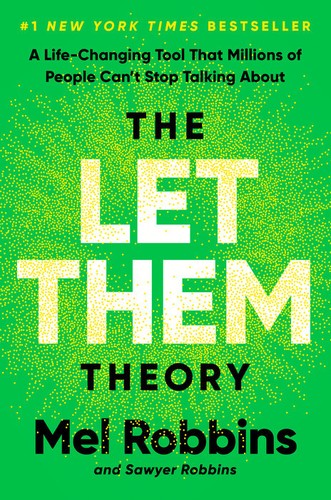
Mel Robbins wrote the book with Sawyer Robbins, her son, who is credited as co-author. The book was published by Hay House on December 24, 2024.
Is The Let Them Theory worth reading?
If you are a chronic people-pleaser, or your mood depends on other people's approval, yes — the core idea is simple and usable the same day. Readers who already live by 'let it go' may find the idea familiar, since the book applies one tool across eight areas of life.
Want the full book?
This summary covers the core ideas — the full book goes much deeper with stories, research, and detail.
Get The Let Them Theory on AmazonAs an Amazon Associate I earn from qualifying purchases.
Your turn
Which idea from this book hit you hardest — and what will you do differently this week because of it? Join the discussion under our 60-second video on YouTube.
Discuss on YouTube
Comments
Share what you thought of this book — good or bad. Sign in with a free GitHub account to comment.
Want a different book summarized? Suggest it here.