The Mountain Is You Summary
🔊 Listen to this summary
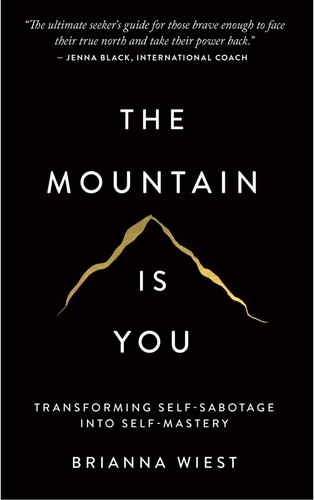
In short
Wiest's argument is that the biggest obstacle in your life is usually not out there — it is your own patterns. Self-sabotage is not laziness or weakness; it is a hidden need being met the wrong way, a way of protecting yourself from rejection, judgment, or the unfamiliar. The way forward is to find that need, understand your triggers, release the past, and start acting as the person you want to become.
You know exactly what you should do — and you do the opposite. You stall the launch, pick a fight in a good relationship, or retreat to comfort just as growth becomes possible. The Mountain Is You summary, in one line: Brianna Wiest says this is not a willpower problem. It is a protection problem. Somewhere inside you, a need you have not admitted is fighting the goal you say you want — and until you see that conflict, no amount of forcing yourself will fix it.
Key takeaways
- Self-sabotage is not laziness or weakness — it is a hidden need being met in a damaging way.
- Every self-defeating habit serves a purpose: protection from rejection, judgment, or the unfamiliar.
- Triggers and strong emotions are information, not orders — they point to what still needs healing.
- You do not let go of the past by waiting for closure; you let go by building a new life.
- Self-mastery is acting as your future self, in small daily choices, guided by principles rather than moods.
The Mountain Is You summary: there is no such thing as self-sabotage
The book's core idea is that self-sabotage does not really exist — at least not in the way we usually mean it. Wiest argues that every self-defeating behavior meets a need we have not admitted. You never finish the business plan because unfinished work cannot be judged. You pick fights in a good relationship because closeness feels unsafe. You stay in a job you hate because the familiar feels safer than the unknown.
This reframe changes the fix. Forcing yourself to stop rarely works, because the behavior is doing a job for you. Instead, Wiest says, ask what the behavior gives you — and find a healthier way to meet that need. The gap between who you could become and who you are playing it safe as is where self-sabotage lives. Once the hidden need is named, you can judge whether the protection is still necessary, or whether you are guarding yourself against a threat that no longer exists.
Your triggers are the guides to your freedom
Wiest's second big idea is that triggers are not enemies — they are information. A huge reaction to a small thing points to an old wound. Jealousy points to what you want but believe you cannot have. Anger points to a boundary that was crossed. Fear points to something that matters to you.
The mistake is treating strong emotions as orders to obey. Wiest argues that emotions are data, not directives: feel them fully, understand what they are signaling, and then choose what to do. A trigger is a map to the exact place where healing is still needed — which is why avoiding your triggers keeps you stuck, while paying attention to them shows you the way forward.
Emotional intelligence: feel it, then choose
Building emotional intelligence, in Wiest's telling, is learning to interpret what your body and feelings are telling you instead of being run by them. Low emotional intelligence is what keeps sabotage cycles spinning: you feel discomfort, you act to escape it immediately, and the pattern repeats.
The practice is simple to describe and hard to do. Notice the feeling. Name the need underneath it. Then respond deliberately instead of reacting automatically. Wiest is clear that this is not about suppressing emotion — it is about letting the emotion speak without letting it decide. Over time, that gap between feeling and action is where self-mastery is built.
Release the past by building a new future
The book's most practical advice is about letting go. Wiest argues that you do not release the past by waiting for closure or by endlessly analyzing old wounds. You release it by building a new life — small daily choices, routines, boundaries, and environments that make the right action the default.
That means picturing your highest potential future self and acting like that person now, in small ways: the morning routine they keep, the boundaries they hold, the environments they choose. Self-mastery, in the end, is not perfection. It is living by principles rather than moods — consistency under pressure, aligned choices, and a kinder kind of self-leadership.
Who should read this book
Anyone who keeps stalling at the edge of a goal they genuinely want. It is especially useful if you have tried willpower and discipline and found they do not stick — because Wiest's point is that the problem was never effort. It is a short, gentle read, best for people who are tired of fighting themselves and ready to understand themselves instead.
The takeaway
In the end, it is not the mountain we master, but ourselves.
The mountain is not the job, the habit, or the relationship. It is the fear, the avoidance, and the old identity that keeps pulling you back to the familiar. Stop attacking yourself for the sabotage, and start asking what it is protecting. Name the need, meet it better, and climb one small choice at a time.
Our verdict
A warm, readable book with one genuinely useful reframe: self-sabotage as protection, not failure. It is light on research and can feel repetitive in places, so read it as practical self-help rather than psychology. But if you recognize yourself in its pages, it is a short read that can change how you treat yourself. Our rating: 4.0/5.
Try this today: Name one thing you keep avoiding, and ask what need the avoidance is meeting.
If you want to go deeper on this theme, Mindset, The Let Them Theory, and The Subtle Art of Not Giving a F*ck are the natural next reads.
Frequently asked questions
What is The Mountain Is You about?
Brianna Wiest argues that self-sabotage is not laziness or weakness. It happens when a hidden, often unconscious need conflicts with a conscious goal — so we protect ourselves in ways that hold us back. The way out is to find the need, understand our triggers, release the past, and act as our future selves.
What does "there's no such thing as self-sabotage" mean?
Wiest's point is that self-sabotaging behavior always serves a purpose: it meets a need we have not admitted, such as safety, comfort, or avoiding judgment. The behavior is not the problem to attack — the hidden need is the problem to understand and meet in a healthier way.
Is The Mountain Is You based on science?
It draws on psychology ideas such as emotional intelligence and the way the brain prefers the familiar, but it is a popular self-help book, not a research text. Its value is the practical reframe — seeing self-sabotage as protection, not failure — rather than new science.
Who should read The Mountain Is You?
Anyone who keeps stalling at the edge of a goal they genuinely want — procrastinating on a launch, picking fights in a good relationship, or retreating to comfort just as growth becomes possible. It is a short, gentle read for people who are tired of fighting themselves.
How long is The Mountain Is You?
About 240 pages in the paperback edition — a few hours of reading, in seven short chapters.
Want the full book?
This summary covers the core ideas — the full book goes much deeper with stories, research, and detail.
Get The Mountain Is You on AmazonAs an Amazon Associate I earn from qualifying purchases.
Your turn
Which idea from this book hit you hardest — and what will you do differently this week because of it? Join the discussion under our 60-second video on YouTube.
Discuss on YouTube
Comments
Share what you thought of this book — good or bad. Sign in with a free GitHub account to comment.
Want a different book summarized? Suggest it here.