Set Boundaries, Find Peace Summary
🔊 Listen to this summary
In short
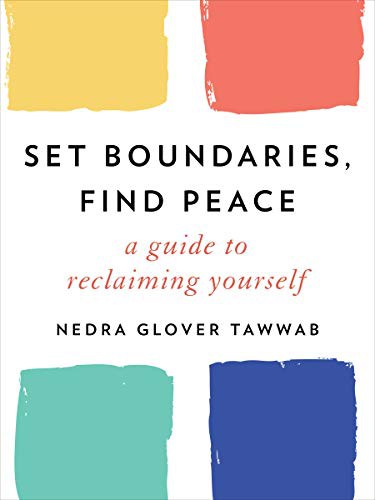
Set Boundaries, Find Peace is a therapist's practical guide to the skill most people were never taught: saying no, stating needs clearly, and holding the line when others push back. Nedra Glover Tawwab, a licensed therapist and relationship expert, defines boundaries as the expectations and needs that make you feel safe and comfortable in your relationships, then shows how to recognise porous, rigid and healthy boundaries, how the six types — physical, sexual, intellectual, emotional, material and time — show up in daily life, and how to communicate them with concrete scripts. The book is organised in two parts: first the foundations, then boundaries applied to family, romantic relationships, friendships, work, and social media and technology. Its promise is simple: clearer boundaries mean less resentment, less burnout, and more peace.
Do you say yes when you mean no, then resent the person you just agreed to help? In Set Boundaries, Find Peace, therapist Nedra Glover Tawwab argues that the exhaustion, guilt and quiet fury of over-giving are not personality traits — they are the cost of boundaries that were never set, and they can be fixed with language you can practise today.
Key takeaways
- Boundaries are expectations, not ultimatums. A boundary states what you need to feel safe and comfortable in a relationship; it is about your behaviour and limits, not about controlling the other person.
- Most boundaries are porous, rigid or healthy. Porous boundaries let everything through and lead to burnout; rigid boundaries shut everyone out; healthy boundaries are clearly communicated and reflect your real values.
- There are six types to watch. Physical, sexual, intellectual, emotional, material and time boundaries each get violated in different ways, and most people are strong in some and weak in others.
- Guilt is normal — and not a stop sign. Feeling guilty, sad or even disloyal when you set a boundary is common, especially if your upbringing punished it; the feeling passes, and the relationship usually improves.
- You need scripts, not just insight. Tawwab gives actual wording for hard conversations, because knowing you need a boundary is useless if you cannot find the sentence when the moment arrives.
What boundaries actually are
The book opens with the story of a client, Kim, who says yes to everything and is quietly falling apart — a pattern Tawwab sees constantly in her therapy practice. From there she defines her terms: boundaries are the expectations and needs that make you feel safe and comfortable in your relationships. They spell out the rules of a relationship, protect time for yourself, and replace the dread, anxiety and resentment that build up when limits are never stated. She is blunt about the warning signs: stress, dread, anxious thoughts, avoiding people, feeling overwhelmed and fantasising about disappearing are all signals that boundaries are missing, not that you are a bad friend, partner or employee.
Tawwab then sorts boundaries into three kinds. Porous boundaries are easily violated — the people-pleasing, overcommitting, can't-say-no pattern. Rigid boundaries are overprotective and cynical, keeping everyone at a distance so nobody can hurt you, at the cost of closeness. Healthy boundaries sit in between: clearly communicated, consistent, and rooted in your actual values rather than in fear or habit. Most readers, she suggests, will recognise themselves as porous in some areas and rigid in others, and the first step is simply naming which is which.
Why we don't have them
The second chapter tallies the cost of a boundary-free life: exhaustion, discouragement and the slow build of resentment toward people you actually love. Tawwab calls the overcommitting pattern "superhero syndrome" — saying yes to too many commitments until you collapse — and notes the evasions people use instead of setting a boundary: moving away, gossiping, complaining, silent treatment. None of these work, she argues, because the underlying problem is never addressed, so the same conflict repeats in the next relationship. The third chapter then asks why boundaries are so hard in the first place, and the answers are often old: childhood trauma, abuse and neglect can violate a person's boundaries so early that they never learn what a healthy one feels like.
Guilt gets a careful hearing here. Tawwab acknowledges that setting a boundary can feel guilty, sad or even traitorous, particularly in families or cultures where self-sacrifice is treated as love. Her reframe is to focus on the health of the relationship rather than the discomfort of the moment: a boundary is not a rejection of the person, it is the condition that lets the relationship survive. Saying no, she insists, is not selfish — it is a reasonable act of self-care, and the people who genuinely care about you will adjust.
The six types and how violations look
Chapter four lays out the book's main framework: six types of boundaries. Physical boundaries govern your body and personal space; sexual boundaries govern consent and intimacy; intellectual boundaries govern your thoughts, opinions and right to disagree; emotional boundaries govern how much of other people's feelings you absorb and how your own are treated; material boundaries govern your money and possessions; and time boundaries govern your hours and attention. Tawwab notes that emotional boundaries are the ones people struggle with most — being told how to feel about your own experience, or being expected to carry someone else's emotions for them — and that physical boundaries became newly visible during the pandemic.
The fifth chapter turns to violations, including the small "micro" violations of everyday life: the interruptions, the unsolicited advice, the borrowed money never returned, the meeting that eats your lunch hour. She then examines the communication styles that undermine boundaries — passive, aggressive, passive-aggressive and manipulative — and the ways people test limits, pushing to see whether a new boundary is real. Her advice is consistent throughout: name the behaviour plainly, state the boundary clearly, and expect some pushback, because people who benefited from your lack of boundaries will not always welcome the change.
Boundaries in real life: family, love, work and screens
The second half of the book applies everything to the places boundaries actually break down: family, romantic relationships, friendships, work, and social media and technology. Each chapter mixes case examples from Tawwab's practice with scripts — actual sentences to use when a parent guilt-trips you, a partner dismisses your feelings, a boss piles on after hours, or a friend treats your time as unlimited. The trauma chapter, which deals with how past harm shapes present boundaries, is the book's heaviest section, and Tawwab handles it with the care of a working clinician rather than a motivational speaker.
What makes these chapters work is their specificity. Rather than telling readers to "communicate better," Tawwab shows what communication looks like when it is working: short, direct, unapologetic sentences, delivered once, without over-explaining or negotiating against yourself. She also prepares readers for the aftermath — defensive reactions, ghosting, silent treatment — and for the fact that some relationships will not survive a new boundary. The book's final chapter asks what comes next: boundaries are not a one-time fix but a practice, and honouring them is a daily choice that gets easier with repetition.
Who should read this book
This book is for people-pleasers, over-givers, exhausted carers and anyone who dreads saying no — and for anyone whose relationships feel draining rather than nourishing. It is especially useful for readers who want usable language, not just theory, and for those navigating difficult family dynamics or a workplace that treats their time as free.
The takeaway
Set Boundaries, Find Peace turns an abstract idea — boundaries — into a learnable skill with types, examples and scripts. Its message is that peace is not the absence of conflict but the presence of clear limits, and that learning to state those limits is one of the kindest things you can do for yourself and your relationships.
Our verdict
Warm, direct and genuinely practical, with frameworks and scripts readers can use the same day. It loses a little for repetition — the core ideas circle back often — and some scripts will feel too formal for real conversations. Our rating: 4.6/5.
Try this today: Say no to one small request you would normally accept out of guilt — no long explanation, just "I can't do that this time" — and notice that the world does not end.
If you want to go deeper on this theme, Attached, Daring Greatly, and The Courage to Be Disliked are the natural next reads.
Frequently asked questions
When was Set Boundaries, Find Peace published?
16 March 2021, by TarcherPerigee (Penguin Publishing Group).
What are the three types of boundaries?
Porous boundaries, which are easily violated; rigid boundaries, which are overprotective; and healthy boundaries, which are clearly communicated and reflect your values.
What are the six types of boundaries in the book?
Physical, sexual, intellectual, emotional, material and time boundaries.
Is Set Boundaries, Find Peace a New York Times bestseller?
Yes — it was an instant New York Times bestseller and, according to the author's Amazon biography, has been translated into more than 35 languages.
Who is Nedra Glover Tawwab?
A licensed therapist and relationship expert, founder of the group therapy practice Kaleidoscope Counseling, and one of the most widely followed therapists on Instagram.
Does the book include exercises?
Yes — it includes checklists, reflection questions, writing prompts and word-for-word scripts for difficult conversations, and Tawwab later published a companion workbook, The Set Boundaries Workbook.
Want the full book?
This summary covers the core ideas — the full book goes much deeper with stories, research, and detail.
Get Set Boundaries, Find Peace on AmazonAs an Amazon Associate I earn from qualifying purchases.
Your turn
Which idea from this book hit you hardest — and what will you do differently this week because of it? Join the discussion under our 60-second video on YouTube.
Discuss on YouTube
Comments
Share what you thought of this book — good or bad. Sign in with a free GitHub account to comment.
Want a different book summarized? Suggest it here.